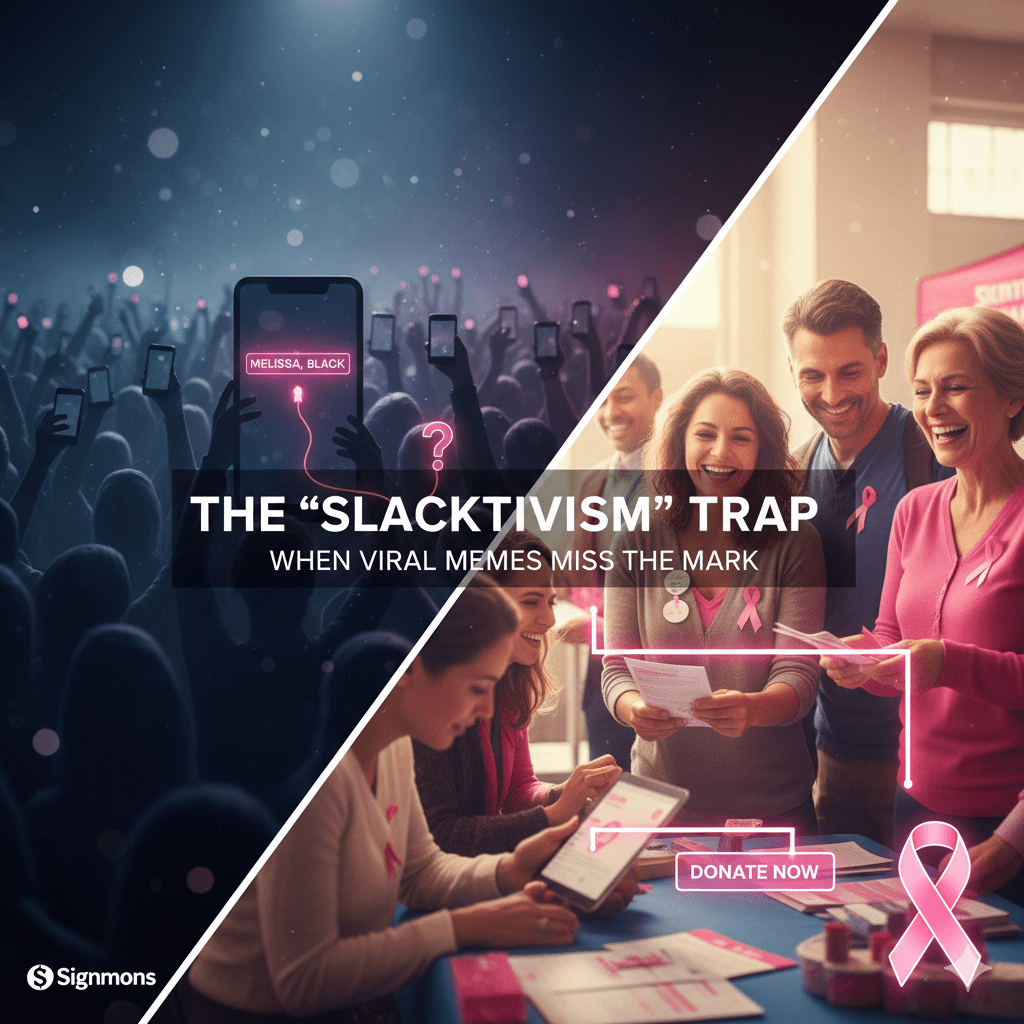
When Facebook exploded with a “bra color” meme I was as intrigued as everyone else. One day my feed was full of opaque status updates — pink, black, leopard print. No context. No explanation. Like many people I laughed, guessed and moved on. Yet the entrepreneur in me kept circling back to a bigger question: what was this actually accomplishing?
What Happened: A Viral Spike With No Backbone
The “breast cancer meme” began as a private message that asked women to post the color of their bra as a status and forward the message to their friends. It evolved into messages like “I like it on the… sofa” and spread rapidly across North America and Europe. The secrecy and flirtatious tone made participants feel like part of an in‑group, and the meme was picked up by mainstream media. In less than a day the Susan G. Komen Foundation’s Facebook page gained more than 100,000 new “likes”.
The meme’s reach was undeniable, but its impact on actual fundraising was unclear. As the CBS News coverage observed, the foundation saw a surge in subscriptions to its fan page, yet “whether that will translate into legitimate donations isn’t clear”. Popularity does not automatically equal dollars raised, and this campaign is a prime example of how vanity metrics can distract from meaningful outcomes.
Attention Isn’t the Same as Action
As someone who builds technology for blue‑collar businesses, I see parallels every day. A free HVAC app download doesn’t matter if the user never opens it again; likewise, a Facebook “like” is meaningless if it doesn’t lead to a behavior change. Likes and shares are vanity metrics — they make us feel good but aren’t tied to conversions or outcomes. The Komen meme moment proves that virality without strategy is just digital smoke.
Have you ever participated in a viral “awareness” post? Did it change your behavior or motivate you to learn more about the cause?
What This Taught Me as a Builder
When I co‑founded Signmons, an AI platform for small service companies, I learned quickly that engagement alone doesn’t pay the bills. We track metrics like completed installs, subscriptions, and repeat usage. Vanity metrics — downloads, page views, likes — are useful indicators but only when tied to a funnel. The breast cancer meme lacked that funnel. It excluded half the population (men also get breast cancer) and sexualized the disease, turning attention into trivia rather than advocacy.
Here’s a builder’s takeaway:
- If your problem isn’t awareness, don’t pretend it is. Most people are aware of breast cancer. The real work is funding research and helping patients through treatment.
- Make your call to action explicit. A secret code posted on social media doesn’t ask for anything. Encourage readers to schedule a screening, donate to a research center or volunteer at a local clinic.
- Create a ladder of engagement. Leverage initial excitement to build a relationship. After your audience comments or shares, invite them to join an email list, attend an event or donate. This is how you convert attention into action.
What’s the last online campaign that actually moved you to take action? Why did it resonate?
How It Could Have Been Done Better
The meme’s organizers (whoever they were) left value on the table. Here are concrete ways they could have turned virality into impact:
- Clear call to action. Each private message could have included a link to a donation page, an educational resource or a volunteering sign‑up. This would have given curious onlookers something to do besides guess bra colors.
- Inclusive messaging. Breast cancer affects everyone. Excluding men not only alienates potential allies but also ignores male patients.
- Storytelling over innuendo. Instead of sexualized innuendo (“I like it on… the chair”), share survivor stories or statistics to inspire empathy and urgency. Emotional narratives are more likely to drive donations and advocacy.
- Conversion tracking and follow‑up. Any spike in traffic or sign‑ups should be nurtured through emails and targeted content. Build a relationship so supporters understand where their money or time is going.
Have you ever seen a social media campaign convert your attention into action through a clear call to action? Share an example.
Closing Thoughts
Social media can raise eyebrows, but if it doesn’t raise funds, shift behavior, or build community, it’s just noise. Viral campaigns like the bra color meme prove that attention without strategy is a missed opportunity. As digital marketers, builders and consumers, we must demand more. Let’s use our platforms to inspire real change rather than fleeting curiosity.
What do you think? Do viral awareness campaigns help, or do they just make us feel helpful? I’d love to hear your thoughts in the comments.
 Digital Influence Strategy

Leave a comment