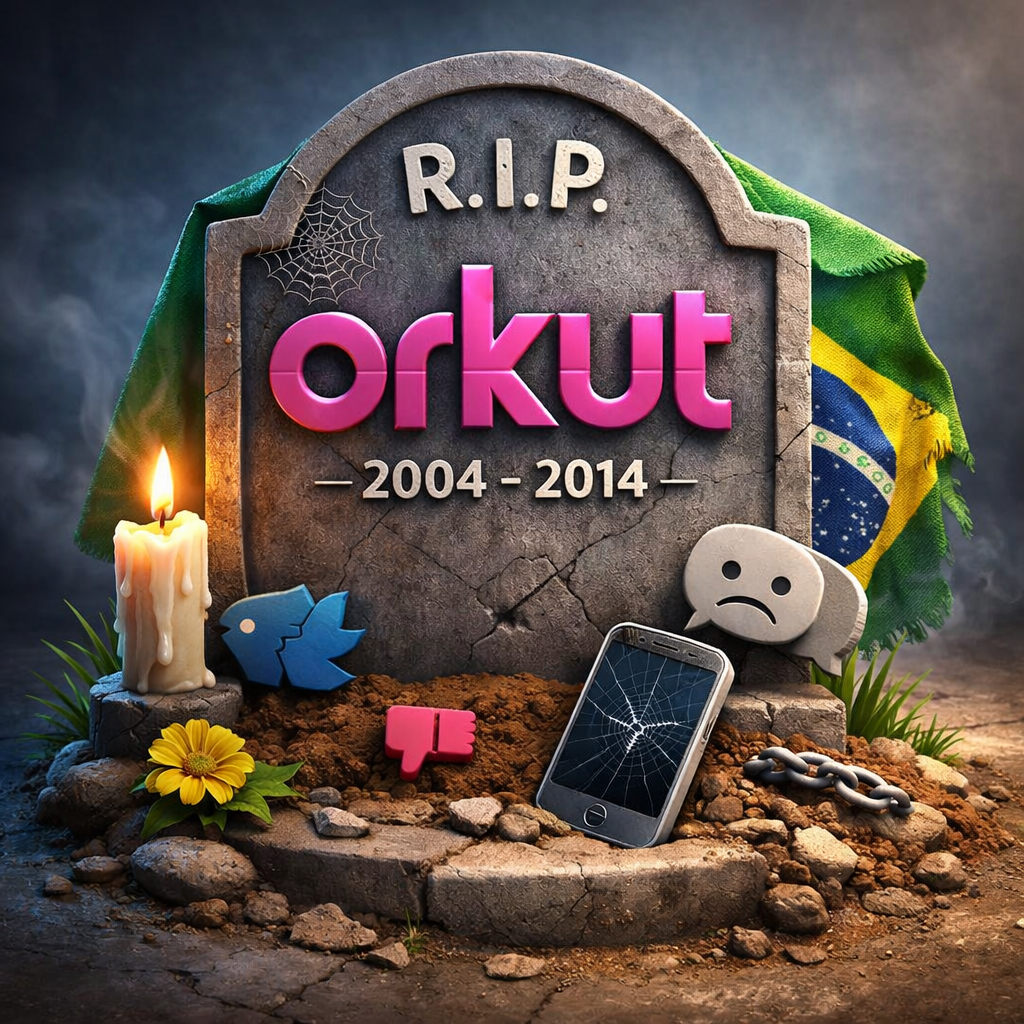
What if I told you one of the most successful social networks ever… failed anyway?
Before Facebook dominated globally, before Instagram became culture, there was Orkut—a platform that didn’t just grow… it took over an entire country.
At its peak, 90% of Orkut’s traffic came from Brazil. Let that sink in.
So what went right—and more importantly, what went wrong?
Let’s break it down 👏
🚀 The Rise: Why Orkut Worked So Well
Orkut wasn’t just another social network. It tapped into human behavior, culture, and exclusivity all at once.
🔑 1. It Made Community the Core Experience
Instead of just “adding friends,” Orkut allowed users to:
- Join communities based on interests
- Discover people through shared groups
- Connect through schools, jobs, and locations
👉 This created identity-based engagement, not just social interaction.
🔒 2. Exclusivity Created Demand
Early on, Orkut was invite-only.
That simple move did two powerful things:
- Built perceived value
- Made users feel like insiders
This is classic social psychology—people want what they can’t easily access.
🌎 3. It Matched Brazilian Culture Perfectly
This is where Orkut really dominated.
Brazil had:
- A strong social-first culture
- High trust in peer recommendations
- Rapid growth in digital and mobile usage
And Orkut delivered exactly what users wanted:
- Community interaction
- Social validation (ratings like “cool” and “trustworthy”)
- Easy connection with others
👉 It wasn’t just a platform—it became part of daily life.
⚠️ The Fall: Where Orkut Lost Everything
Here’s the part most people miss… Orkut didn’t fail because it started weak. It failed because it stopped evolving.
❌ 1. Poor User Experience Over Time
- Slow loading times
- Limited features
- Restrictions on connections
In a world where user expectations constantly rise… friction kills growth.
❌ 2. Lack of Content Evolution
- Video
- Mobile-first experiences
- Rich media sharing
Orkut stayed relatively basic—a huge problem in a market that loves visual and interactive content.
❌ 3. It Ignored Cultural Shifts
- Social video
- Mobile engagement
- Seamless sharing
Orkut didn’t keep up—and when platforms stop matching culture, users leave. Fast.
🤔 The Marketing Lesson (This Is What Most People Miss)
Orkut proves something powerful: social media success is not about being first—it’s about staying relevant. Here’s what that means in practice:
📍 What Orkut Got Right
- Built community-first engagement
- Leveraged exclusivity psychology
- Aligned with local culture
📍 What Orkut Got Wrong
- Failed to adapt to user behavior
- Ignored content evolution (video, mobile)
- Didn’t innovate fast enough
🔗 Real-World Connection: Why This Still Matters Today
- Facebook struggling with younger audiences
- Snapchat losing ground to TikTok
- Even X (Twitter) constantly reinventing itself
Platforms don’t die because they’re bad—they die because they stop adapting.
📊 The Deeper Insight (MBA-Level Thinking)
From a strategy perspective, Orkut highlights a key concept: Technology + Culture = User Behavior.
- Platforms succeed when they match how people live and interact
- Not just what technology can do
- When that alignment breaks… growth stops
💡 If I Were Rebuilding Orkut Today…
- Introduce short-form video content
- Build mobile-first design
- Use AI-driven recommendations
- Create creator-based communities
- Add social commerce features
In other words… turn Orkut into a modern ecosystem, not just a network.
🎯 Final Takeaway
Orkut didn’t fail because it lacked users—it failed because it lost relevance. And in social media marketing, that’s everything. Attention is earned. Relevance is maintained.


Debynyhan,
I enjoyed reading your blog. I thought it was very easy to read and follow and really enjoyed how you broke it up into little sections pointing out the good and the bad of Orkut. I liked the insight and I agree that it wasn’t that Orkut was unsuccessful it was that they stopped evolving with the needs of its users and became irrelevant and difficult to use in their daily needs. With as successful as Orkut was I think it may have stood a chance of still being here and in the running as a top app if they had kept themselves relevant for its users. I also thought it was very nice how you brought in what you would do with Orkut if it was still around. How you would change it to make it still relevant and capable of doing what the users are needing it to do. That was really cool I didn’t think of that and think it brings a new aspect to your blog. Even if others realized that this is what would need to change in order for Orkut to still be around or be around again I liked that you said it instead of just thinking it. If you were to design a website like Orkut would you and who would you market to? Do you think had Orkut kept itself relevant that its popularity would have extended into the US or other countries other than its main users being from Brazil? Just wondering what your thoughts are on that aspect of it if Orkut was still here today.
LikeLike
Hi Debynyhan, Great visuals. I was born in Colombia, and Brazil is a neighbor country. You mentioned that Orkut matched Brazilian culture perfectly. I could not agree more because Brazil has always been open, very public online, and socially expressive. Early social platforms grew fastest in cultures that were already highly interactive and motivated by connection (Mahoney L. M., & Tang T., 2016).
In 2004 Brazilians were already heavily digital connected, socially expressive, and not shy about meeting strangers online. Opposite to Colombia, in 2004 our culture was less engaged in early online social behavior. We were not that open to connecting or meet with random people online. The difference is that Brazil had a massive early internet adaptation. This case study made me think a lot about why Orkut was not popular in Colombia, and my conclusion is that Brazil dominated the narrative. Orkut created the perfect playground for them. Orkut in South America was in Portuguese. We speak Spanish. Bottom line, we did not feel represented.
You said something very important too that Orkut ignored cultural shifts, but I will say Orkut ignored cultural necessity. Orkut focused too much on social connection and did not evolve. Platforms must adapt to user needs to stay relevant (Mahoney L. M., & Tang T., 2016). Orkut did not, and that was the start of the end.References
Mahoney L. M., & Tang T. (2016). Strategic Social Media: From Marketing to Social Change. Wiley Global Research (STMS). Retrieved from MBS Direct: Strategic Social Media: From Marketing to Social Change
LikeLike