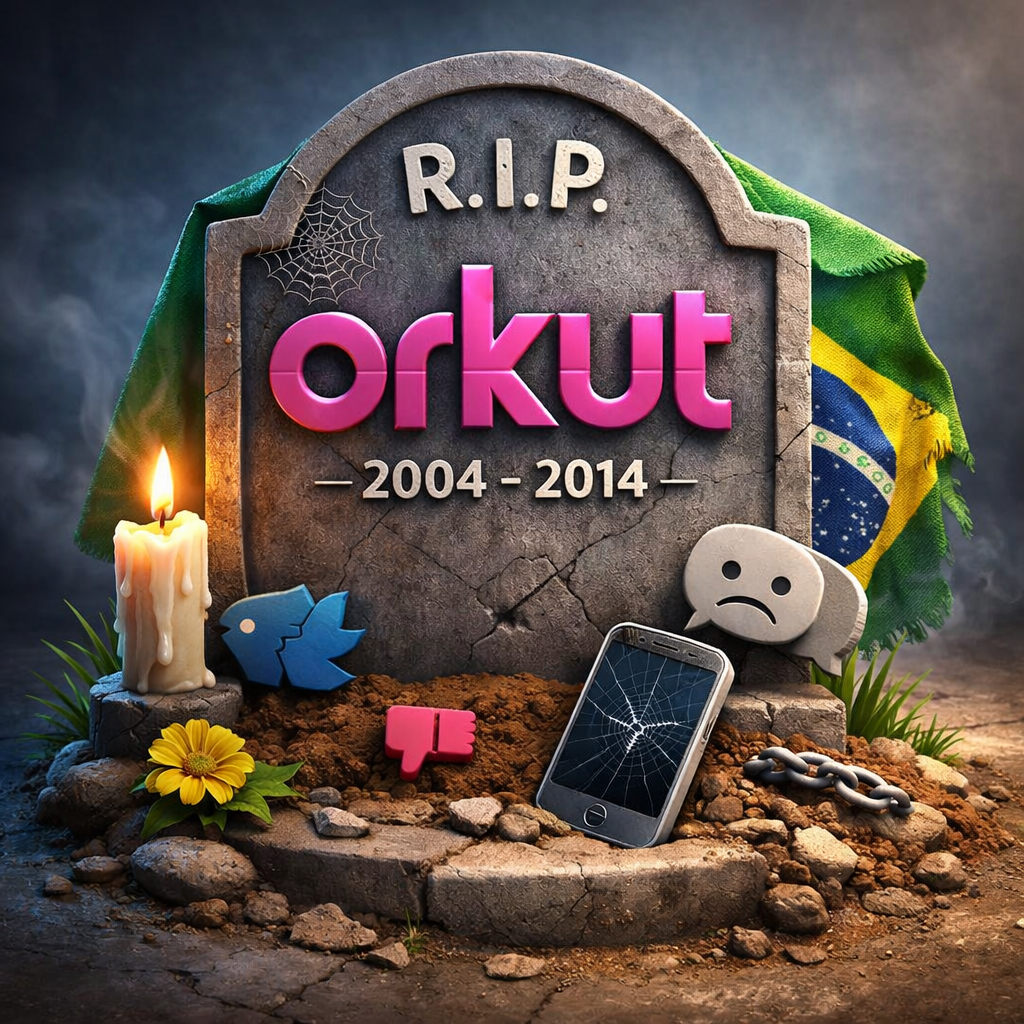
Why Orkut Won Brazil—Then Lost Everything: A Social Media Lesson Most Brands Ignore

What if I told you one of the most successful social networks ever… failed anyway?

Before Facebook dominated globally, before Instagram became culture, there was Orkut—a platform that didn’t just grow… it took over an entire country.

At its peak, 90% of Orkut’s traffic came from Brazil. Let that sink in.

So what went right—and more importantly, what went wrong?

Let’s break it down 👏

🚀 The Rise: Why Orkut Worked So Well

Orkut wasn’t just another social network. It tapped into human behavior, culture, and exclusivity all at once.

🔑 1. It Made Community the Core Experience

Instead of just “adding friends,” Orkut allowed users to:

  • Join communities based on interests
  • Discover people through shared groups
  • Connect through schools, jobs, and locations

👉 This created identity-based engagement, not just social interaction.

🔒 2. Exclusivity Created Demand

Early on, Orkut was invite-only.

That simple move did two powerful things:

  • Built perceived value
  • Made users feel like insiders

This is classic social psychology—people want what they can’t easily access.

🌎 3. It Matched Brazilian Culture Perfectly

This is where Orkut really dominated.

Brazil had:

  • A strong social-first culture
  • High trust in peer recommendations
  • Rapid growth in digital and mobile usage

And Orkut delivered exactly what users wanted:

  • Community interaction
  • Social validation (ratings like “cool” and “trustworthy”)
  • Easy connection with others

👉 It wasn’t just a platform—it became part of daily life.

⚠️ The Fall: Where Orkut Lost Everything

Here’s the part most people miss… Orkut didn’t fail because it started weak. It failed because it stopped evolving.

❌ 1. Poor User Experience Over Time

  • Slow loading times
  • Limited features
  • Restrictions on connections

In a world where user expectations constantly rise… friction kills growth.

❌ 2. Lack of Content Evolution

  • Video
  • Mobile-first experiences
  • Rich media sharing

Orkut stayed relatively basic—a huge problem in a market that loves visual and interactive content.

❌ 3. It Ignored Cultural Shifts

  • Social video
  • Mobile engagement
  • Seamless sharing

Orkut didn’t keep up—and when platforms stop matching culture, users leave. Fast.

🤔 The Marketing Lesson (This Is What Most People Miss)

Orkut proves something powerful: social media success is not about being first—it’s about staying relevant. Here’s what that means in practice:

📍 What Orkut Got Right

  • Built community-first engagement
  • Leveraged exclusivity psychology
  • Aligned with local culture

📍 What Orkut Got Wrong

  • Failed to adapt to user behavior
  • Ignored content evolution (video, mobile)
  • Didn’t innovate fast enough

🔗 Real-World Connection: Why This Still Matters Today

  • Facebook struggling with younger audiences
  • Snapchat losing ground to TikTok
  • Even X (Twitter) constantly reinventing itself

Platforms don’t die because they’re bad—they die because they stop adapting.

📊 The Deeper Insight (MBA-Level Thinking)

From a strategy perspective, Orkut highlights a key concept: Technology + Culture = User Behavior.

  • Platforms succeed when they match how people live and interact
  • Not just what technology can do
  • When that alignment breaks… growth stops

💡 If I Were Rebuilding Orkut Today…

  • Introduce short-form video content
  • Build mobile-first design
  • Use AI-driven recommendations
  • Create creator-based communities
  • Add social commerce features

In other words… turn Orkut into a modern ecosystem, not just a network.

🎯 Final Takeaway

Orkut didn’t fail because it lacked users—it failed because it lost relevance. And in social media marketing, that’s everything. Attention is earned. Relevance is maintained.

🔗 Expand Your Insight (External Links)

How WeChat Turned Everyday Actions Into Habit (And What Marketers Can Learn)

Weixin (WeChat) shows how an all-in-one app turns convenience into habit—through timing, low friction, and culturally smart campaigns.

Photo by http://www.kaboompics.com on Pexels.com

Why Did WeChat Grow So Fast?

Most apps fight for attention.

WeChat removed the need to leave.

That’s the difference—and it’s why it didn’t just “go viral,” it became a daily habit for hundreds of millions of users.

It Was Never “Just Another Chat App”

In social media marketing, we often talk about search costs—the hidden effort users spend jumping between apps to get things done. WeChat eliminated that problem. Instead of forcing users to switch between messaging apps, payment platforms, browsers, and social feeds, it combined everything into one seamless experience.

Think about your own habits for a second: How often do you leave one app just to complete a simple task? WeChat asked a better question: What if users never had to leave at all? That shift—from multiple platforms to one ecosystem—is what made WeChat powerful.

The Red Envelope Campaign: Culture + Gamification + Virality

  • Suspense: randomized distribution created excitement.
  • Participation: group gifting fosters conversation.
  • Repeat use: holiday frequency drives habit.
  • Enter the Red Envelope campaign. It blended culture (holiday gifting), emotion (surprise), and social proof (everyone’s doing it). It didn’t feel like fintech. It like fun, tradition, and generosity—updated for smartphones.

As a16z put it, red envelopes were a “secret weapon” for driving mobile payment adoption. That’s a masterclass in digital influence: use the medium (social messaging) to normalize the action (digital payments).

Habit Engineering: How WeChat Builds Daily Use

Here’s how WeChat engineered a loop where every action leads you deeper into the ecosystem:

  • You message a friend → you stay in the app
  • You read an article → you stay in the app
  • You pay a bill → you stay in the app

The more you do, the less you leave. It’s a closed-loop experience—and it’s the same principle behind today’s “super apps.”

What Modern Marketers Should Take From This

  • Audience: young, mobile-first users
  • Needs: convenience and efficiency (reduce search costs)
  • Behavior: reduce effort and time; remove friction

If a platform becomes part of someone’s routine, it stops competing for attention—it becomes a habit. That’s the real lesson: remove friction until participation feels effortless.

For more on how social behaviors can sometimes feel impactful but fall short in reality, check out my post: The Slacktivism Trap: When Viral Awareness Feels Good—but Achieves Nothing.

Learn More and Sources

 For readers who want to dive deeper into the psychology and strategy behind platforms like WeChat, the HBS Digital Initiative offers an in-depth article on how the messaging app became a super-app. Additional recommended readings include the Fogg Behavior Model (B=MAP), which explains how motivation, ability, and prompts interact to drive behavior; Albert Bandura’s work on self-efficacy; and Nielsen Norman Group research on reducing cognitive load for smoother user experiences. These resources will help you design social media campaigns that not only capture attention but also build lasting habits.

For a comprehensive look at planning and executing social media programs, explore the textbook Strategic Social Media Management: Theory and Practice

If you have thoughts or questions, feel free to leave a comment below!

Leave a comment